
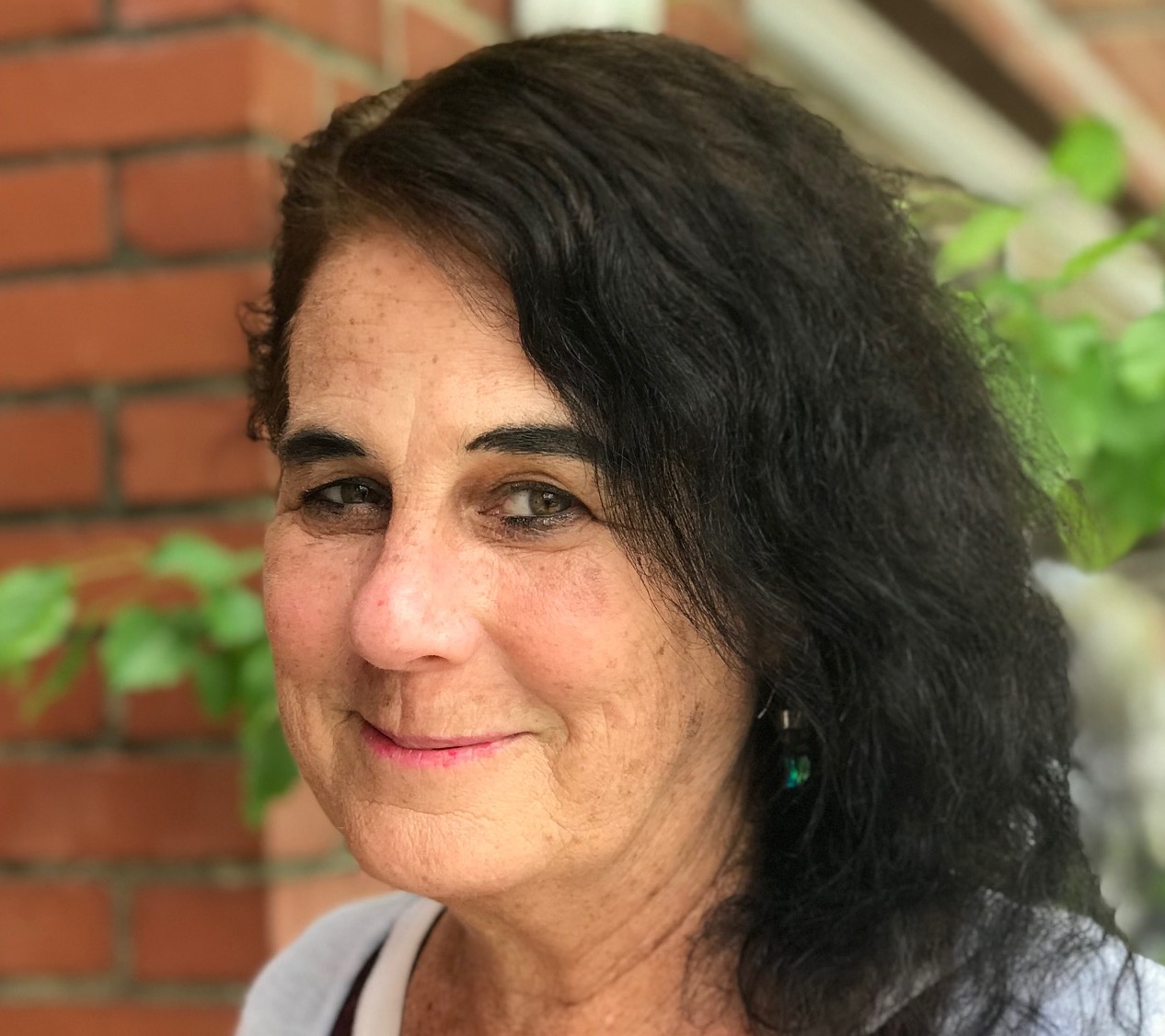

By Anne Blythe
Though Louise Mae Beale Vincent was a woman small in stature, she left a monumental legacy in her 49 years.
The Greensboro native became an unlikely international force, a giant in the harm-reduction movement who pushed throughout her life against society’s dehumanization, isolation and rejection of drug users.
Vincent, a self-described on-again, off-again heroin user who battled addiction herself, was a fierce and persuasive advocate for needle exchanges, the overdose reversal drug naloxone, checking the contents of street drugs with a mass spectrometer and other methods to help keep people with addictions alive so they have a chance at recovery.
The news of her death on Aug. 31 dealt a collective gut punch to a broad swath of people and organizations, local and national, that work to reduce the adverse health, social and economic consequences of drug use.
Michelle Mathis, a founder of Olive Branch Ministry, a faith-based harm-reduction organization in Hickory, told NC Health News in a recent phone interview that she’s been struggling to process the loss.
She was at the Opioid Overdose Response Teams: Best Practices Summit in Asheville in early October and had to fight back tears when she saw a photo honoring Vincent’s legacy on the back of the program.
“Louise was bare bones, raw, funny — but lived harm reduction like few people I’ve ever seen,” Mathis said. “That was not just her passion, it was her life. She just had such a magnetic personality.”
Unbridled passion
Vincent was born on March 15, 1976, and at just 2 years old she began to exhibit a penchant for adventure and living life with fearless passion.
The Rev. Morris Brown, senior pastor at Christ United Methodist Church in Greensboro who led the celebration of Vincent’s life on Oct. 5, revealed how as a small child, Vincent raced down the family’s steep driveway on her Big Wheel tricycle, swerving at the very end, barely missing the cars in the street.
By 6, Brown continued, Vincent had mastered “the art of using the rotary phone,” figuring out how to order pizza while her parents were away.
Her “coup de grace,” as he described it, came at the age of 11, when she wasn’t ready to go to church on time with her family. Her parents told her she would have to stay at home by herself, but she was of a different mind. Somehow, she knew that taxis took people to church for free on Sundays, Brown said, so she called one and surprised her family at church before the morning services began.
By 13, Vincent told NPR during a 2023 interview, she started using drugs and found it difficult to live sober long term.
That didn’t stop Vincent from studying sociology at Greensboro College and, as Brown said, building “a framework that prepared her to not only think about, but passionately pursue her life’s work — her life’s work of addressing social and cultural inequities, racial inequality and educating the world around the importance of harm reduction.”
Vincent also earned a master’s degree in public health from UNC Greensboro.
Vincent grew into a champion and advocate for the marginalized far beyond Greensboro and North Carolina through her work at the National Survivors Union (formerly Urban Survivors Union) and more recently the North Carolina Survivors Union. She built the North Carolina site in Greensboro into a formidable policy-changing organization that landed her on national and international stages.
In addition to the many harm-reduction conferences where she was a sought-after speaker, Vincent spoke before the U.S. Congress and the United Nations. She can be seen, too, on a CNN “Under the Microscope” segment, with physician-reporter Sanjay Gupta, administering naloxone and rescue breaths to bring a friend back from an overdose.

Unapologetic chutzpah
In 2018, Vincent was awarded the inaugural Dan Bigg Award at the National Harm Reduction Conference, honoring her work and paying tribute to Bigg’s pioneering influence widely distributing naloxone to stave off overdose deaths long before policymakers had come around to that way of thinking.
Bigg, known by many in the harm-reduction community as the “architect of naloxone distribution” in this country, also was a firm believer that “asking permission was less important than doing what’s right,” according to the National Harm Reduction Coalition.
Vincent, a kindred spirit, had similar chutzpah.
“She was feisty. She was brilliant,” Brown said, relaying comments he had gathered before the memorial service last month. “She was a friend you always wanted in your corner, but if you invited her to be in your corner, you better get ready to hear hard truths — truths nobody else would utter.”
Vincent spoke with knowledge acquired from living a life that dealt more than its share of blows. In 2013, she had to have a leg amputated after she was struck by a car in a hit-and-run. Her daughter Selena died in 2016 from an overdose while in a rehab center. She was just 19 years old.
A few years ago, Vincent had an adverse reaction to xylazine, a veterinary tranquilizer that has increasingly been found in some illicit drug supplies. That led to a blood disorder and chronic health problems that eventually caused her death, The New York Times reported.
Instead of hiding the wounds created by the xylazine (a common reaction), Vincent helped bring the problem to the forefront and called for reducing the stigma of drug use, partly through detailing her experience in a 2021 article for a harm-reduction publication.
“Hospital policy and our medical system create deadly barriers for people who use drugs,” Vincent wrote. “We are then not able to access the help we need and are left to deal with life-threatening infections by ourselves.”


Fighting a stigma
Trying to do away with the stigma that drug users confront — in their communities, in health care facilities and elsewhere — was at the forefront of Vincent’s mission. She stood up over and over again to echo the values that coursed through her: All should be treated with dignity.
Subsequently, that attitude coursed through the North Carolina Survivors Union.
“She was like the living, breathing heart, the engine of our movement,” said Caty Simon, who worked alongside Vincent in the Greensboro organization, helping her with grants and sharing participants’ stories, and as a fellow team member at the National Survivors Union.
Nick Voyles, treasurer of the union’s board, talked about the void created by Vincent’s absence. She was a friend, a force, a person he enjoyed spending time with whether it was doing harm-reduction work or relishing the exhilaration on her face as she tooled around on a jet ski when Vincent, her partner Don Alan Jackson and Voyles’ wife all spent a day at a lake.
“It’s going to be boring without her around,” Voyles said. “There will never be a person like her again.”
Vincent “changed the face of what’s going on now,” Voyles said of the harm-reduction movement. “She helped change policy … She helped change people’s minds. She helped change the way people think about themselves and the world around them, and she was just so effective.
“We’re just going to have one big gaping hole until we can heal. It’s just devastating.”
Ryann Koval, the union’s deputy director, still brims with ideas she wishes she could share with Vincent.
Dozens of syringe exchange programs have sprung up in North Carolina. NC Department of Health and Human Services has a listing here.
“I still wake up and think, ‘Oh, I should call Louise and ask her about this,’ because Louise knew everything.” Koval said. “Louise was just a force. She was much bigger than she appeared, and her voice was much bigger.”
“I feel like Louise could come up with an idea at the front of a room and everyone would want to be part of that idea by the end of her talking about it,” Koval said.
Vincent, she added, “was really close to all the issues because she was not only seeing them in our participants, she also was living them and her friends were living them.”
Koval came to the organization in late 2020 from a mental health field not as steeped in harm reduction.
“I had never once considered asking in my education, ‘What do we do with the people who don’t want help?’” Koval said. “We talked so much in counseling about how to move people thinking about help, to getting help and stuff like that. We didn’t ever really talk about the people who weren’t ready for help yet.”
Vincent opened Koval’s eyes to “the people that our counseling world would sometimes say are ‘treatment resistant,’ or ‘aren’t willing to work.’” Soon she was looking differently at the people who came to their organization seeking clean needles, drug testing or other harm-reduction tools.
“I’ve worked with them for years,” Koval said. “And I’ve seen them while they’re using, while they’re living different lifestyles, living in and out of chaos still progressing along, and doing better than they were before — and growing and learning new things. I just felt like Louise was showing me this world that I didn’t even think about before.”
Strategy backlash
Strides have been made over the years in making harm reduction more widely accepted. When Vincent first embraced the strategy, much of the work was still being done underground. In the 1980s, community organizers distributed clean needles and educated drug users on safe use practices in response to the AIDS epidemic.

Health and social service systems slowly warmed to the strategy. Over time, policies have evolved to expand access to naloxone to stave off overdose deaths, buprenorphine, an opioid medication that can actually reduce users’ cravings for opioids and syringe service programs.
Along the way, though, there has been backlash. Despite the positive experiences of other countries and a growing body of research, some contend harm-reduction strategies send the wrong message and enable, or even encourage, drug use. Others claim the programs lead to more criminal activity.
This summer, President Donald Trump issued an executive order on homelessness that calls for the elimination of substance use disorder funding for “programs that fail to achieve adequate outcomes, including so-called ‘harm reduction’ or ‘safe consumption’ efforts that only facilitate illegal drug use and its attendant harm.”
“That’s not something we haven’t dealt with before,” Koval said. “There’s always been a contingent of people who’ve been of this persuasion, and there’s a different way to speak about it to help it make more sense to them. A lot of that is we are helping people stay alive long enough to decide to recover if they can.”
Vincent, according to Koval, had a gift of breaking complicated topics down to make them easier to understand and embrace. Koval picked up some of those tactics from Vincent, explaining that she tries to find analogies that might resonate with people who don’t use drugs.
“Some people might be able to understand it more with food,” she said. “Some people might be able to understand it more with work, even, and working too much. Some people might be able to understand it more with different things that they overindulge in.
“Food is a good one because food you can’t do without,” Koval continued. “So you can’t stop. There’s so many habits, so many things that form around the things we do that it’s never just as simple as just stopping.”
Vincent stressed the importance of community in confronting these challenges — whether it’s while trying to overcome eating disorders, bad work habits or drug use.
“When people have been kicked out and put out of every house on the block — and that to some seems like, ‘Well that should make them change their life,’” Koval said. “That also could make them use until they die.”
By providing a community, Koval said, the Survivors Union tries to help people get to a place “where they have hope and power to decide what they want to do for themselves.”
That way, “it’s not someone telling them they have to,” Koval added. It has to be “something that makes sense for them.”
“That’s how you live long term … if it’s something you buy into and it’s something that makes sense for you in that time and in that space.”
KEEP UP WITH THE LATEST


