

By Anne Blythe
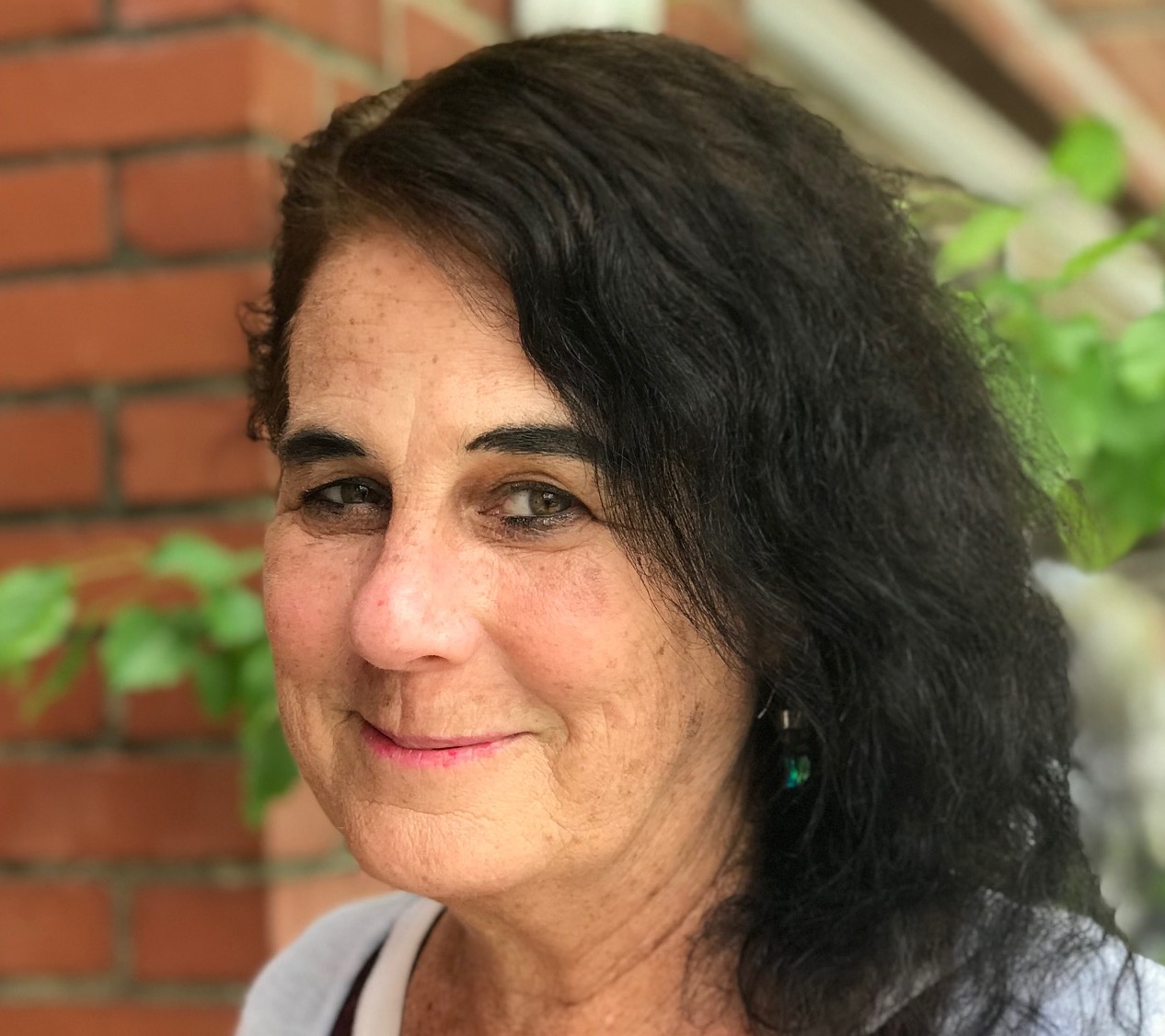
Shital Patel became a widow almost five years ago after she took her husband, an admired cardiologist, to a Wilmington dentist for what she was told would be a routine dental implant procedure.
Hemant “Henry” Patel, nicknamed “Ninja” in the electrophysiology lab because of his ability to tackle complex challenges, died on Aug. 3, 2020, after complications arose during the administration of anesthesia while he was in the dental chair, causing his brain to be deprived of oxygen for too long.
His widow vowed shortly after that to do what she could to make sure deep sedation and anesthesia rules were changed so dentists across North Carolina would have to have an anesthesiologist or certified registered nurse anesthetist present when performing such procedures on patients in a subconscious state.
That did not happen in her husband’s case. Nor did the rule change that she advocated for occur.
Now, Patel is pressing for changes to the North Carolina State Board of Dental Examiners that would not only allow for more consumer advocates on the board, but also put the appointment process into the hands of elected officials.
She has support in the General Assembly too.
Key Republican senators are pushing changes that would shift the board selection power to legislators, the governor and state labor commissioner, contending the new process will make the dental board more accountable to the public.
Advocates for dentists argue that ulterior motives are afoot — that the lawmakers are really trying to open the door for private equity firms and hedge funds to buy, open and operate dental practices in North Carolina. Such practices owned by non-dentists, they contend, can sometimes value profits more than safety.
Election vs. selection
Republican state Sens. Amy Galey of Burlington, Benton Sawrey of Clayton and Jim Burgin of Angier are sponsoring Senate Bill 599, which got a hearing in the Senate Health Committee on April 16 before being sent to the Senate Rules Committee, which plays a powerful role in deciding which legislative proposals move forward during the session.
As proposed in the bill, another dental hygienist and another consumer representative would be added to the dental board, increasing it from eight to 10 members — six licensed dentists, two licensed hygienists and two consumer advocates.
The governor, Senate president pro tempore and speaker of the state House of Representatives each would appoint two dentists. One of the hygienists and one consumer advocate would be appointed by the governor. The state labor commissioner also would appoint a hygienist and consumer advocate.
As the board has been structured for many years, dentists stand for election among themselves for three-year terms. There are elections every year for two members, so there is a revolving slate of fresh voices. A licensed hygienist stands for election every three years, and a consumer advocate who is a resident of the state is appointed by the governor.
The dental board structure, like many across the country, has been described over the years as giving an outsized control of the industry to active market participants who are able to stymie competition. That was the gist of the argument 10 years ago when the U.S. Supreme Court found the North Carolina board could be held in violation of federal antitrust laws after it accused teeth whitening companies that had proliferated in shopping malls of practicing dentistry without a license and ordered dozens of them to cease and desist.
The Cato Institute and Pacific Legal Foundation, two organizations fighting for less occupational licensing and freer trade in the country, issued a report in February showing that a decade later neither the North Carolina dental board nor most others across the country had relinquished much active market control.
“The majority of licensing boards in North Carolina operate through some form of hybrid process of appointment, including the medical board, North Carolina optometry, North Carolina podiatry, the opticians, physical therapists and the chiropractic board,” Galey said to her fellow health committee members on April 16. “Why is it important that our boards be appointed instead of elected? It’s because when you have a closed profession, which is self-governing, it is inherently problematic to risk self-dealing and self-protecting of the profession.”
“We have a very small group of dentists in North Carolina who are absolutely empowered to make decisions that may in some cases be benefitting the profession more than the public at large,” Galey added. “It’s just inherently full of risk for people to emphasize their own commercial interests over the interests of the public.”
The state board is responsible for ensuring that the dental profession in North Carolina merits and receives “the confidence of the public and that only qualified persons be permitted to practice dentistry and dental hygiene,” according to its website. The board is responsible for licensing dentists and hygienists across the state, promulgating and enforcing the rules of practice, and investigating and disciplining those who violate them.
“I also think it’s incredibly important when you have a state agency that is exercising the authority of the state, that those people have accountability to the public at large,” Galey said. “Arguably, the dentists who are self-electing of their own people, they are using the power of our state to grant licenses to dentists, to disallow licenses from dentists. They’re using their power to discipline people. That is the power of the state of North Carolina.”
“And because they’re using the power of the state,” Galey added, “there has to be accountability to people other than those that are just in the profession.”
Advocating for consumers
Shital Patel traveled from Wilmington to the health committee meeting in Raleigh last week to advocate for more consumer representation on the board. She briefly recounted what happened to her husband.
During the dental implant procedure that should have taken no more than 30 minutes, Henry Patel’s heart rate and oxygen saturation levels dropped to life-threatening levels while he was sedated, a dental board investigation showed. His oxygen saturation level remained at that dangerously low level for 20 minutes before emergency service responders arrived.
The dentist, Mark C. Austin, who has since surrendered his North Carolina dental license, tried unsuccessfully to open Patel’s airway with an endotracheal tube, according to the dental board order about the incident. Cardiopulmonary resuscitation was not administered until EMS workers arrived. The dental board order noted that Austin “was a chronic or persistent user of intoxicants,” and when he surrendered his license, he signed an agreement with a program that treats dental professionals with substance use issues.
“When my husband started convulsing, the oral surgeon on his team thought he was feeling pain instead of fighting for air so they gave him more sedation,” Patel told the Senate health committee. “No one performed CPR in that office, and by the time EMS arrived, they worked on him for almost 30 minutes and still got his heart beating again. However, his brain never got oxygen during that entire time, and he passed away three days later leaving me a widow at age 47 and our children fatherless at ages 21 and 19. I have decided to take this pain and turn it into purpose, and since then I have become an advocate for patient safety in the dental setting.”
The state dental board held public hearings and comment periods in 2022 on a rule change proposed after Henry Patel’s death that would have required that an anesthesiologist or nurse anesthetist be present for such procedures going forward. A chorus of oral surgeons raised objections, contending that compliance would make emergency dental care cost-prohibitive for some and add an access barrier in low-wealth communities.
The dental board ultimately tried to thread the needle, balancing the hue and cry to do something while stopping short of requiring additional personnel to be present for deep sedation.
In 2024, new rules were put in place to require dentists to obtain special permits to perform certain levels of sedation such as general anesthesia and moderate conscious sedation. Requirements were added for facilities where intravenous sedation occurs with specific inspection rules. The board also issued guidelines in 2023 for dentists without special permits who administer low levels of sedation, such as nitrous oxide, or “laughing gas,” to dental patients with anxiety about their appointments.
Patel had hoped for more. She was buoyed last year, when someone from former Gov. Roy Cooper’s office let her know that her name was being put forward as the new consumer advocate on the board.
“However, the dentists intervened, and that position got taken away from me,” Patel told the health committee.
Patel was never appointed, as The Assembly, an online in-depth news publication founded in 2020, recently dug into, “I thought I would have made an excellent public advocacy for this team, and that’s why I’m here to ask that there be more consumer members to support our public and community’s health,” Patel said.
Follow the timeline
Jim Goodman, executive director of the North Carolina Dental Society, an advocate and powerful lobbying organization for the state’s dentists, stressed that what happened to Patel’s husband was a “tragedy.”
“We in the entire dental community, obviously, have the greatest sympathy and feel terrible for Mrs. Patel, the family and what happened there,” Goodman said. “With that said, the causes of that were not related to regulations or lack thereof but were related to people not following them and a dentist, quite frankly, doing things the wrong way.”
“He has been dealt with,” Goodman added. “He lost his license. And we would fully support that.”
What troubles Goodman is how the proposed legislation to change the selection process for the dental board came up this session. He traces it back to Senate Bill 316, which was filed on March 17 by Burgin, Galey and Sawrey, the same three senators who are sponsoring the proposed dental board changes.
Tucked into that proposed legislation, titled “An Act Lowering Healthcare Costs and Increasing Price Transparency,” was language to “clarify” the definition of partnerships regarding the practice of dentistry. That clarification, Goodman and others say, opens the door for private equity firms to open dental practices in North Carolina that would not have to be run by dentists.

As it is now, the state dental board allows dental support or dental service organizations, more commonly known as DSOs in the industry, to operate in North Carolina, but the practices have to be owned by a dentist or association of two or more dentists who are licensed to practice here, a significant barrier to entry.
Private equity firms and hedge funds that have been sinking a toehold into the dental profession across the country at an accelerated pace during the past decade see North Carolina as untapped fertile ground.
The dental board has successfully blocked those inroads, much to the chagrin of some lawmakers. The firms can raise money from investors or pension funds and acquire companies that they think can be run more profitably. To achieve savings or drive profits, they might cut staff or, in some cases, set internal standards to increase the number of procedures and bring in more money without maintaining quality care.
“This has been a topic of debate for years,” Goodman said.
The North Carolina dental profession — in which the average annual wage in 2023 was about $205,000, putting the state in the top 25 percent in the country — successfully rallied enough opposition to get Senate Bill 316 amended to no longer include language that opens the door to non-dentist private equity ownership.
“That bill was all about medical insurance, except once again, the language to change corporate ownership in dentistry in North Carolina was slipped into that bill,” Goodman said. “And we, the dental community, pushed back and reached out. And that language was amended out of 316 before the health care committee took action or took the bill up.”
At that time, Goodman added, he was told that there was the possibility that lawmakers would “be addressing this in another way.”
On March 25, Galey, Sawrey and Burgin filed Senate Bill 599, “An Act To Revise The North Carolina Board of Dental Examiners.”
Then 20 days later, state Senate leaders introduced its two-year budget proposal. The language that would allow the private equity firms to run dental practices that had been edited out of Senate Bill 316 was dropped into the budget.


Private equity grows in other states
The American Dental Association issued a report by the ADA Health Policy Institute on Aug. 6 that shows that the number of dentists associated with private equity across the country nearly doubled over six years. From 2016 to 2021, dentists affiliated with such organizations went from 6.6 percent to 12.8 percent.
Private equity companies came into the market offering the advantage of access to capital for equipment or expansion goals and the potential to streamline non-clinical administrative operations for multiple sites.
In some states, such as California, efforts are underway to restrict private equity in management agreements with dentists and physicians so the management teams cannot interfere with the dentists or physicians in health care decisions. The California state attorney general sought last year to get legislation passed that would require hedge funds and private equity firms to notify his office and obtain consent to purchase many kinds of health care businesses.
“If you look across the country now, almost every state or their attorney generals are trying to rein in venture capital, private equity, for profit, whatever influence in health care and/or dental care,” Goodman said. “All you have to do is a Google search on such topics, and you’ll see all sorts of ways. So here in North Carolina in dentistry, we actually have got this correct and have kept it correct, and we’re now looking to switch to the model that everyone else is trying to rein in now.”
Competing assessments
At the Senate health committee on April 16, Galey, the Senate majority whip, pushed back against assertions that the proposed changes to the dental board are tied to an attempt to open the dental profession to private equity organizations.
“I just cannot emphasize enough that this bill does not open the door for non-dentists to own or control dental practices,” Galey said, “We have received dozens of email from folks around the state claiming that this bill does things that it absolutely does not do. This bill continues with the law of North Carolina. It only licenses dentists to own and operate dental practices. It does not do anything to change who can own, who can operate a dental practice. It does nothing to change the standard of care for dentistry or how the profession shall be managed internally. All it does is substitutes appointment for elections.”
Sen. Julie Mayfield, a Democrat from Asheville, addressed similar concerns a bit differently. “I hear you, Senator Galey, that this bill doesn’t do that,” Mayfield said at the end of the meeting. “What this bill does do, however, is open this board up to political appointees that perhaps might be more inclined to change the rules at the dental board, which are now very protective against the corporate practice of dentistry which — if we’re talking about public accountability and patient safety.”
“We want to keep that prohibition in place in North Carolina and not allow non-practicing positions and dentists to be dictating what is happening in the dentist chair,” Mayfield added.
The Senate budget, which was approved on April 17, also includes The NINJA’s Law, named after Henry Patel. The policy included in the budget amends the dental practice act to require dentists who hold permits to administer general anesthesia or sedation to file a report to the dental board within 72 hours of an adverse event and within 24 hours of a fatal incident or one that results in “permanent organic brain dysfunction.” The permit holder would be prohibited from administering sedation until after the board has investigated the incidents.
While Goodman had yet to discuss the NINJA law with the dental society’s board, he thought the general idea of collecting data on incidents would be welcome if what was being asked was not too onerous.
“Let’s be honest, things happen,” Goodman said. “You can follow all the rules and best practices and standard of care and there will be things that occur. …We’re all about data. We’re all about evidence. So this could help track these incidents to inform decisions based on such data and evidence.”
The Senate budget goes to the state House of Representatives, which is expected to release its spending proposal for the next two years in the coming weeks.
The new fiscal year begins July 1. If there are major differences between the House and the Senate plan, lawmakers from each chamber will get together to try to come up with a compromise proposal that’s put up to a vote.
Goodman and others opposed to the board changes and the provision that would allow private equity firms to manage dental practices plan to mount an educational campaign to highlight their concerns.
“I will say, we have a lot more support in the House on maintaining dentist-only ownership in North Carolina,” said Goodman, who’s been leading the dental society for almost a year. “There will be reconciliation on the budget between the two chambers. So there’ll be amendments and so forth to the budget process as well. I’m the new guy, but I understand that this has happened before where it has been put into the budget, and it has been amended out before the budget obviously was approved.”
KEEP UP WITH THE LATEST


